Addressing the Structural Barriers to Scalable Autonomy

Updated: Nov 25, 2025
For decades, autonomous mobile robots (AMRs) have represented one of the most compelling promises in applied artificial intelligence—machines capable of moving safely and independently through human environments.
Yet despite global investment in sensors, algorithms, and computing, large-scale deployment remains elusive for many. The constraint is not capability but reliability, and according to Gartner’s 2024 Industrial AI Market Guide, AMRs still struggle to perform consistently in dynamic, unpredictable spaces. This is the largest barrier to adoption.
The Cost of Hallucination
Systems excel in structured warehouses but deteriorate when exposed to lighting shifts, cluttered corridors, or human movement.
These environments trigger a behavioral failure now recognized as AI hallucination—when perception algorithms misread sensor data, “seeing” obstacles where none exist or overlooking real ones—leading to system hesitations, aborted missions, and long-term downtime.
The IEEE Robotics and Automation Letters (2024) reports hallucination-related errors are the leading cause of manual interventions in deployed AMRs, accounting for up to 60 percent of cumulative downtime across fleets. Each false detection can ripple through operations, causing path-planning resets and delayed task completion. In hospital logistics, these errors necessitate human oversight, undermining the value proposition of autonomy altogether.
Adding more training data or sensors alleviates some symptoms but not the underlying root cause (the lack of internal cross-validation among perception models).
Without a mechanism to detect inconsistencies between sensory inputs, a neural network’s confidence can drift away from reality, producing “phantom” readings that propagate downstream. Resolving that deficiency requires architectural reform, not incremental tuning.

Reliability by Design
Cyberworks Robotics approached this problem with a clean-sheet redesign called OmniSuite—a navigation architecture engineered to eliminate AI hallucinations through deterministic redundancy. Rather than allowing each modality—LIDAR, camera, inertial measurement, semantic mapping—to operate as a separate black box, OmniSuite fuses them into a continuous feedback engine.
Every sensor input is independently benchmarked against companion data streams. When disagreement occurs, an arbitration module evaluates statistical confidence across the inputs, suppressing anomalies before they reach the motion-planning layer. This feedback cycle, measured in milliseconds, enables the system to interpret unpredictable surroundings without misclassification or control freezes.
This design follows the redundancy principle championed by the IEEE Robotics and Automation Society (2024): using cross-modal validation to reduce autonomy error rates by more than 80 percent relative to single-pipeline deep-learning architectures.
Demonstrating Performance
Results from operational environments offer evidence of efficacy.
In 2024 hospital deployments, OmniSuite-powered transport robots achieved a 99.6 percent mission-completion rate with zero hallucination-induced stoppages across more than 1,200 operating hours. Average mean time between human intervention exceeded 400 hours—roughly four to eight times longer than comparable ROS-based frameworks under similar conditions (Cyberworks Field Performance Audits, 2024–25).
In defense-grade logistics trials, the software’s adaptive mapping engine maintained route accuracy despite abrupt environmental changes and temporary localization loss. Instead of halting, the robot reconstructed its map dynamically and resumed operation—demonstrating resilience that is foundational to scaling autonomy in safety-critical applications.

Rethinking Compute Efficiency
Reliability solves one challenge; affordability and power efficiency present another. Most modern AI stacks rely on GPU acceleration for real-time inference, raising both cost and energy demand. Gartner (2024) estimates that GPU infrastructure accounts for up to 30 percent of the total bill of materials for mid-range AMRs, constraining adoption in cost-sensitive markets.
OmniSuite’s architecture addresses this by optimizing dataflow for CPU-based processing. Through model compression and deterministic inference paths, the system achieves sub-200 millisecond motion-planning latency while reducing power draw by more than half compared to GPU-intensive solutions. This efficiency enables OEMs to deploy fully autonomous platforms on industrial-grade embedded hardware rather than expensive high-performance rigs.
Integrating Without Reinventing
Protracted integration cycles further inhibit commercialization. Industry surveys (ABI Research, 2023) show average deployment times of 12–24 months for custom-engineered AMRs relying on open-source components. Lengthy validation—and repeated software-hardware iteration—delays revenue and discourages investment.
OmniSuite reduces this timeline through its full-stack structure connecting low-level control drivers, perception software, and configurable APIs. OEMs can adapt autonomy levels—from assisted navigation (L1) to near-full automation (L4)—without rebuilding their systems. Documented pilot programs achieved operational readiness in 10–12 weeks, an order-of-magnitude improvement over conventional frameworks.
This rapid integration not only accelerates time-to-market but also changes the economics of development. By compressing engineering overhead and safety validation cycles, manufacturers can iterate robot models faster and penetrate new verticals, from healthcare logistics to infrastructure inspection.
From Experimentation to Industrial Reliability
The broad implication is that AMRs are entering a new engineering phase similar to transitions seen in aviation and automotive autonomy: from experimental learning models to deterministic reliability frameworks. By embedding perceptual consistency and cost rationality, you redefine what counts as production-grade autonomy.
As markets mature, reliability metrics—mean time between intervention, power consumption per kilometer, and total cost of compute—are replacing AI sophistication as primary decision variables. Gartner (2024) and Goldman Sachs (2023) both note that sustained expansion into the USD 38 billion physical-AI market will depend on platforms that provide verifiable performance under uncertainty rather than incremental algorithmic gains.
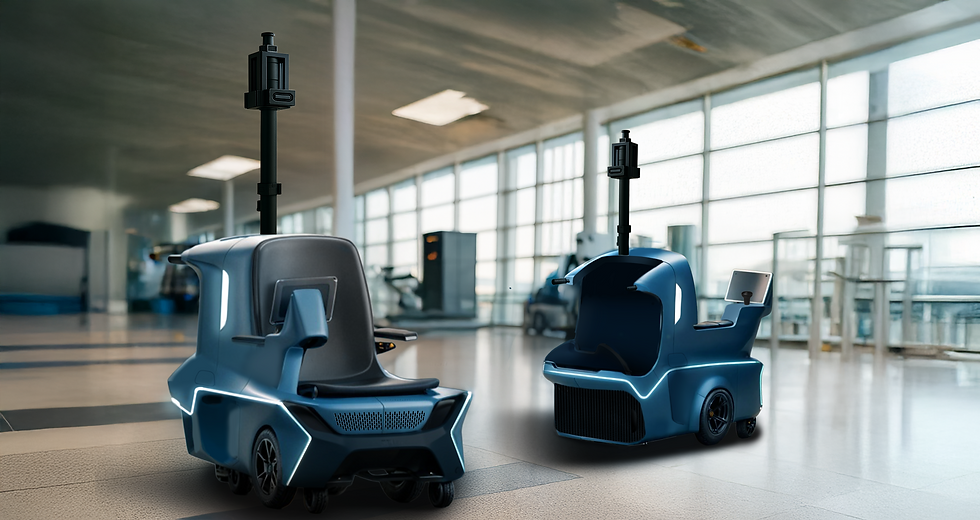
Scaling the Future of Physical AI
By removing the three main barriers—hallucination-driven unreliability, GPU-bound cost, and integration delay—autonomy can finally reach industrial scale. Its deterministic design demonstrates that the path to dependable robotics lies in systemic validation, not raw computational power.
The approach suggests a new paradigm for physical AI: autonomy that not only perceives but understands its environment well enough to question its own perception when necessary. In doing so, it closes the reliability gap that has held back the robotics sector for decades.
As embodied intelligence transitions from research to infrastructure, systems capable of eliminating hallucinations and operating predictably across domains will define the next chapter of robotics commercialization.
(Sources: Goldman Sachs Physical AI Forecast 2023; IEEE RAS Technical Report 2024; Gartner Industrial AI Market Guide 2024; ABI Research AMR Integration Survey 2023; Cyberworks Robotics Field Performance Audits 2024–2025.)

Comments